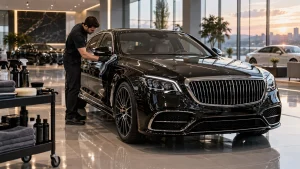


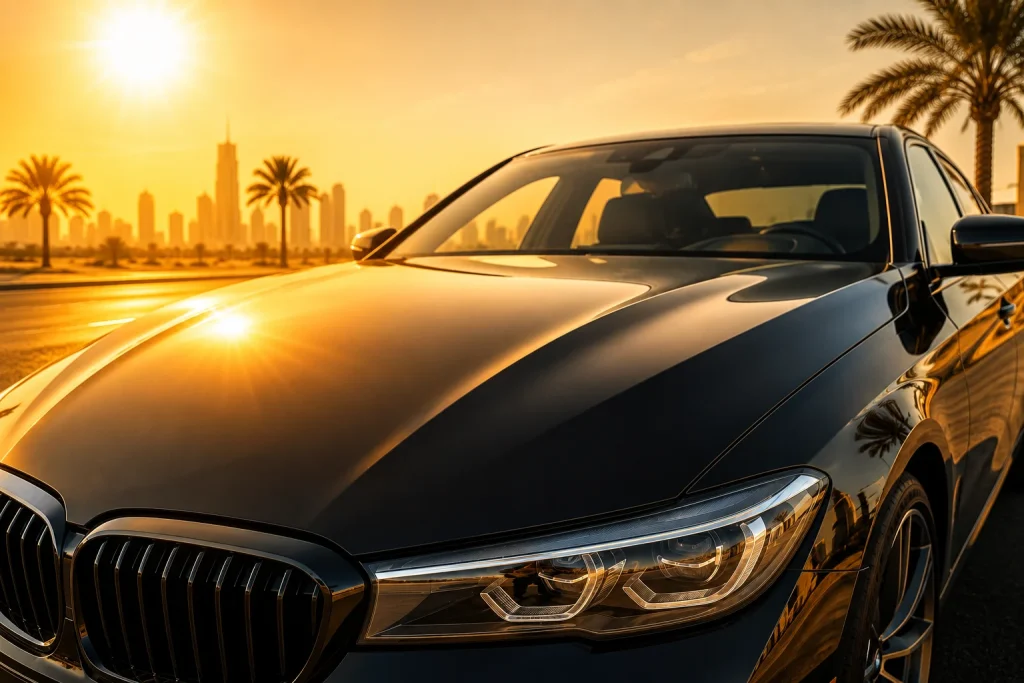
Summer is tough on your car.
Long hours under intense sunlight, high temperatures, UV radiation, dust, sand, road grime and environmental contaminants can all take a toll on your vehicle’s exterior. Even a well-maintained car can gradually lose its shine and finish when exposed to harsh conditions day after day.
But summer damage isn’t inevitable.
With the right combination of paint protection, surface maintenance and proper car care, you can help preserve your vehicle’s appearance and protect its finish for longer.
In this guide, we’ll look at why extreme summer conditions can be hard on automotive paint and how the right protection products can help.
Why Is Summer Heat So Hard on Car Paint?
When your vehicle sits outside on a hot, sunny day, its exterior is exposed to several factors at the same time.
It’s not just the heat.
UV rays + high temperatures + dust + sand + contaminants + repeated temperature changes can create a challenging environment for automotive paint.
Let’s look at some of the biggest concerns.
1. UV Rays Can Fade and Dull Your Paint
One of the biggest enemies of automotive paint is prolonged exposure to ultraviolet radiation.
Continuous UV exposure can gradually affect the appearance of the paint and contribute to:
- Fading
- Loss of gloss
- Oxidation
- A duller appearance
- Uneven colour over time
The longer a vehicle is exposed to direct sunlight without protection, the greater the opportunity for environmental damage.
A dedicated paint protection system can add an important barrier between the original finish and the environment.
2. Extreme Heat Can Stress the Paint Surface
High temperatures can make the vehicle’s exterior extremely hot.
The problem becomes more significant when the surface repeatedly goes through heating and cooling cycles for example, sitting under the sun during the day and then cooling down at night or inside a shaded area.
Over time, repeated temperature changes can contribute to surface stress and accelerate the ageing of the exterior finish.
While you can’t control the weather, you can control how well your vehicle is protected from it.
3. Dust and Sand Can Lead to Fine Scratches
Hot and dry environments often mean increased exposure to dust and airborne particles.
When dust settles on your vehicle, wiping it away without properly washing the surface can drag abrasive particles across the paint.
This can contribute to:
- Fine scratches
- Swirl marks
- Loss of surface clarity
- Reduced gloss
That’s why proper washing techniques are just as important as the protection product you choose.
Always use suitable car-care products, clean microfiber towels and proper washing methods rather than aggressively wiping a dusty vehicle.
4. Environmental Contaminants Can Attack the Finish
Your vehicle’s paint is exposed to much more than sunlight and dust.
Bird droppings, road grime, insects, oils, industrial fallout and other contaminants can settle on the surface.
When these contaminants remain on the paint for extended periods, they can become increasingly difficult to remove and may affect the finish.
A quality protective layer can make the surface more resistant to everyday contamination while also making cleaning easier.
How Can You Protect Your Car From Summer Damage?
There isn’t one product that can solve every paint-protection problem.
The best approach is to create multiple layers of protection and maintain the vehicle properly.
Here are some of the most effective solutions.
1. Protect the Paint With PPF
Paint Protection Film (PPF) provides a physical layer between your vehicle’s original paint and the outside environment.
For drivers who want protection against stone chips, road debris, scratches and everyday surface damage, PPF can be one of the most effective solutions available.
Concept X Paint Protection Film
Explore Concept X Paint Protection Film
Concept X PPF is designed to provide a durable protective layer for automotive paint while maintaining the vehicle’s appearance.
Its key features include:
- Self-healing technology
- UV and heat resistance
- Hydrophobic properties
- Stain and chemical resistance
- Protection against stone chips
- Scratch and abrasion resistance
- High-gloss finish
- Long-term protection
PPF can be particularly useful on high-impact areas such as the front bumper, bonnet, fenders, mirrors and other areas exposed to road debris.
For vehicles regularly driven on highways or in harsh environments, PPF provides an additional physical barrier that helps protect the original paint underneath.
2. Add Ceramic Protection to the Paint
PPF isn’t the only way to protect your vehicle.
A ceramic coating creates a protective layer over the paint that can improve water repellency, reduce contamination adhesion and help maintain the vehicle’s gloss.
طلاءات النانو سيراميك
Nano ceramic coatings can help provide:
- Enhanced gloss
- Hydrophobic protection
- Improved water repellency
- Reduced dirt adhesion
- Easier maintenance
- Additional environmental protection
A ceramic coating doesn’t eliminate the need to wash your vehicle. Instead, it works alongside proper maintenance to make the surface easier to keep clean and protected.
3. Maintain Hydrophobic Protection
Once your vehicle has a protective coating, maintaining its hydrophobic performance is an important part of long-term care.
Zirconite Bead-Magik
Zirconite Bead-Magik is a super-hydrophobic coating designed to enhance water beading, gloss and surface protection.
It can be used on surfaces including:
- Automotive paint
- Glass
- Plastic
- Wheels
Its hydrophobic properties help water and contaminants move away from the surface, making routine maintenance easier.
Don’t Forget About Your Car’s Glass
Summer protection isn’t only about the paint.
Intense sunlight can also make the vehicle’s interior extremely hot and expose interior surfaces to UV radiation.
Automotive window film can help reduce solar heat entering the cabin while providing UV protection.
Nano Care Ceramic Window Films
Explore Nano Care Automotive & Architectural Window Films
Nano Care Ceramic Window Films are designed to provide heat rejection and UV protection while maintaining driving visibility.
For example, Nano Care A5 Ceramic Window Film provides high UV rejection and infrared rejection, depending on the selected specification.
Explore Nano Care A5 Ceramic Window Film
Reducing solar heat entering the vehicle can improve cabin comfort while helping protect interior materials from prolonged exposure to sunlight.
The Best Summer Car Protection Strategy
For the best results, don’t think about car protection as a single product.
Think of it as a complete protection system.
Step 1: Protect against physical damage
Use PPF on areas that are most exposed to stone chips, road debris and scratches.
Step 2: Protect the surface
A ceramic coating can add hydrophobic protection, enhance gloss and make the vehicle easier to maintain.
Step 3: Maintain the protective layer
Use a suitable hydrophobic maintenance product such as Zirconite Bead-Magik to help maintain water repellency and surface performance.
Step 4: Protect the cabin
Install quality ceramic window film to help reduce solar heat and UV exposure through the vehicle’s glass.
Step 5: Wash the vehicle correctly
Never aggressively wipe a dusty or sandy vehicle.
Use a proper car wash solution, clean microfiber towels and safe washing techniques.
Step 6: Remove contaminants quickly
Bird droppings, insects, road grime and other contaminants should be removed as soon as reasonably possible.
The longer contaminants remain on the surface, the harder they can be to remove.
Can You Completely Prevent Summer Damage?
No.
No coating, film or detailing product can make a vehicle completely immune to the environment.
However, the right protection system can significantly reduce the impact of everyday exposure and help preserve the appearance of your vehicle.
The goal isn’t simply to make your car look good today.
It’s about protecting the original finish and keeping your vehicle looking better for longer.
Protect Your Car Before Summer Takes Its Toll
Extreme summer conditions can be hard on automotive paint.
UV radiation, high temperatures, dust, sand, road debris and environmental contaminants can gradually affect the appearance and condition of your vehicle.
The right combination of PPF, ceramic coating, hydrophobic protection, window film and proper maintenance can give your vehicle a much stronger line of defence.
At Grand Line, we provide professional automotive protection and detailing solutions designed to help protect, maintain and enhance vehicles in demanding environments.
Explore All Grand Line Products
Whether you’re a vehicle owner, detailing professional or automotive business, choosing the right protection system can make a significant difference to the long-term appearance of a vehicle.
Protect the finish. Preserve the shine.