
Glass has become an essential part of modern architecture. From large office façades and commercial storefronts to villa windows, glass doors and interior partitions, modern buildings increasingly rely on glass for natural light, visibility and contemporary design.
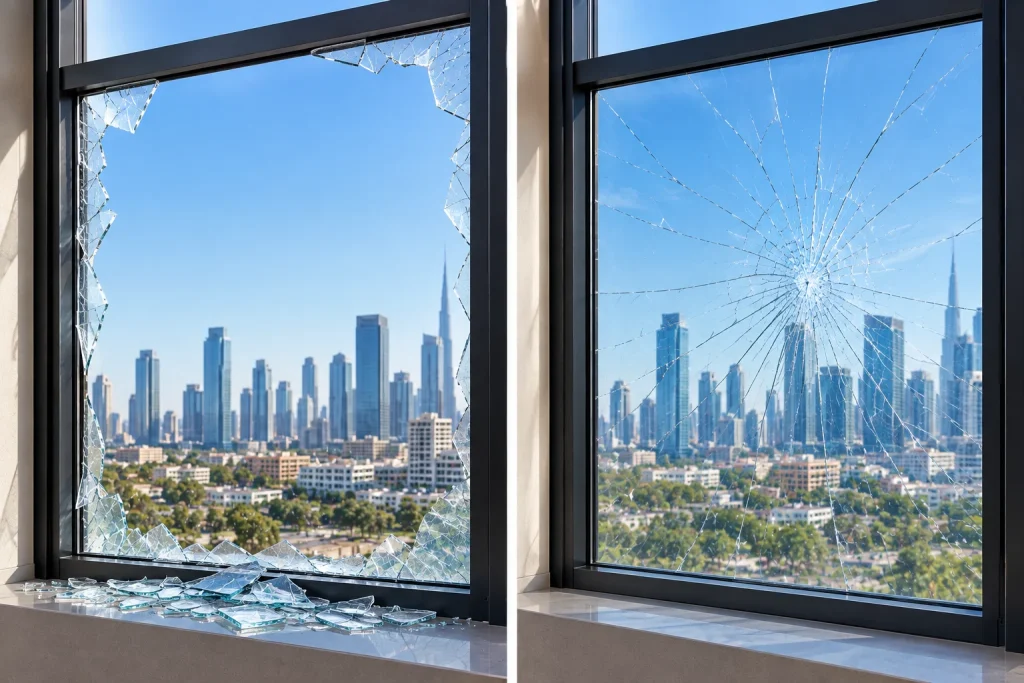
However, glass can also become a safety concern when it is damaged or broken.
Architectural Safety & Protective Window Film provides an additional layer of protection for existing glass, helping hold broken glass fragments together after impact while maintaining the clear appearance of the glazing.
Grandline International Trading offers NANO CARE Safety & Protective Window Film, a transparent 4 mil film designed to provide an extra layer of strength and protection for glass and smooth surfaces.
What Is Architectural Safety & Protective Window Film?
Architectural Safety & Protective Window Film is a specially engineered film applied directly to glass surfaces.
The film bonds to the glass and creates an additional protective layer. If the glass is impacted and breaks, the film helps hold the shattered glass fragments together rather than allowing them to scatter freely.
Grandline’s NANO CARE Safety & Protective Window Film has a 4 mil thickness, a transparent/crystal-clear finish, and is supplied in a 1.50 m × 30 m roll.
This makes it suitable for properties where additional glass protection is required without significantly changing the appearance of the existing glazing.
Why Is Architectural Glass Safety Important?
Large areas of glass can create a clean and modern architectural appearance, but broken glass can create dangerous sharp fragments.
Glass can be damaged by:
- Accidental impact
- Human contact
- Furniture or equipment impact
- Flying debris
- Vandalism
- Everyday wear
- Other unexpected impacts
When untreated glass breaks, fragments can fall or scatter into surrounding areas.
A professionally installed Architectural Safety & Protective Film helps retain broken fragments on the filmed surface, providing an additional level of protection.
Key Benefits of Architectural Safety & Protective Window Film
1. Helps Hold Broken Glass Together
The primary advantage of safety and protective window film is glass fragment retention.
When glass is broken following an impact, the film helps keep the fragments together instead of allowing them to scatter freely.
This can help reduce the potential hazard associated with loose broken glass.
2. Adds an Extra Layer of Protection
Safety film provides an additional protective layer over existing glass.
Grandline’s NANO CARE Safety & Protective Clear Film is designed to improve safety while maintaining clear visibility.
It can be considered for buildings where additional protection is required without replacing the existing glazing.
3. Maintains the Appearance of Glass
Architectural design is important. Safety improvements should not necessarily require changing the appearance of a building.
The NANO CARE Safety & Protective Film features a transparent, crystal-clear finish, allowing the original appearance and visibility of the glass to remain largely unchanged.
This makes clear safety film particularly suitable for modern buildings with large transparent windows and glass façades.
4. Helps Reduce the Risk Associated With Broken Glass
Broken glass can create a safety concern for people occupying or passing through a building.
By helping hold shattered fragments together, safety film can help reduce the movement of broken glass following impact.
It is an additional protective measure that can be incorporated into a building’s overall glass-safety strategy.
5. Protection Against Everyday Wear
In addition to helping with glass protection after impact, Grandline’s safety film is designed to provide dependable protection against scratches, minor impacts and everyday wear.
This makes it a practical consideration for busy residential and commercial environments.
Where Can Architectural Safety Window Film Be Used?
Architectural Safety Window Film for Every Type of Building
Safety and protective window film can be considered across a wide range of residential, commercial, institutional, hospitality and public buildings.
1. Schools
Schools contain large numbers of students, teachers, staff and visitors moving through corridors, classrooms and common areas.
Glass windows, doors and partitions can be found throughout modern educational facilities.
Safety film can be considered for:
- Classrooms
- Glass doors
- Corridors
- Reception areas
- Administration offices
- Libraries
- Laboratories
- Staff rooms
- Cafeterias
- Indoor activity areas
- Common areas
- Entrance glazing
Adding a protective layer to suitable glass can help reduce the risk associated with shattered glass in busy educational environments.
2. Universities & Colleges
Universities and colleges often combine large glass façades with extensive interior glazing.
Safety film can be considered for:
- Lecture halls
- Classrooms
- Laboratories
- Libraries
- Administration buildings
- Student centres
- Reception areas
- Corridors
- Glass doors
- Internal partitions
- Common areas
It provides a discreet solution where maintaining the original appearance of architectural glass is important.
3. Offices & Corporate Buildings
Modern offices commonly feature glass meeting rooms, partitions, doors and large external windows.
Safety and protective film can be used in:
- Corporate offices
- Business centres
- Executive offices
- Meeting rooms
- Conference rooms
- Reception areas
- Glass corridors
- Internal partitions
- Office doors
- External windows
- Shared workspaces
A clear protective film allows businesses to maintain the modern appearance of glass while adding an additional layer of protection.
4. Hospitals & Healthcare Facilities
Healthcare facilities have constant movement of patients, visitors, medical staff and equipment.
Glass is frequently used in hospitals, clinics and medical centres.
Suitable applications can include:
- Hospital windows
- Clinic windows
- Glass doors
- Reception areas
- Waiting rooms
- Consultation areas
- Corridors
- Internal partitions
- Laboratories
- Administration areas
- Medical centres
- Diagnostic facilities
Safety film can be considered wherever suitable glass is located in areas with regular human activity.
5. Hotels & Resorts
Hotels and resorts use glass extensively to create bright, luxurious environments.
Architectural safety film can be considered for:
- Hotel windows
- Entrance doors
- Lobby glazing
- Glass partitions
- Guest areas
- Conference rooms
- Restaurants
- Reception areas
- Corridors
- Resort facilities
- Spa areas
- Administrative areas
The crystal-clear appearance of Grandline’s safety film makes it suitable for applications where maintaining the architectural design is important.
6. Shopping Malls
Shopping malls contain extensive storefront glazing and high levels of pedestrian activity.
Safety film can be considered for:
- Shopfronts
- Entrance doors
- Mall entrances
- Store partitions
- Glass railings where suitable
- Reception areas
- Common areas
- Service areas
- Office areas
- Display areas
It can provide an additional protective layer without requiring a major visual change to existing glass.
7. Retail Stores
Retail stores rely heavily on glass for visibility, natural light and product displays.
Applications include:
- Storefront windows
- Entrance doors
- Display windows
- Internal partitions
- Reception areas
- Customer service areas
- Back-office areas
- Showrooms
Safety film can help provide additional protection for glass in high-traffic retail environments.
8. Showrooms
Automotive, furniture, electronics, fashion and other showrooms often feature large glass façades.
Safety and protective window film can be considered for:
- Large display windows
- Entrance glazing
- Glass doors
- Reception areas
- Internal partitions
- Customer areas
- Office glazing
The clear finish helps preserve the visibility and presentation of the showroom.
9. Banks & Financial Institutions
Banks and financial institutions can contain extensive areas of architectural glass.
Suitable applications may include:
- Branch windows
- Entrance doors
- Reception areas
- Customer service areas
- Internal partitions
- Meeting rooms
- Office windows
- Administrative areas
Safety film can form part of a wider glass protection strategy.
10. Government Buildings
Government facilities often combine public access areas with offices and administrative spaces.
Safety film can be considered for:
- Government offices
- Public service centres
- Reception areas
- Entrance doors
- Waiting areas
- Internal partitions
- Administrative offices
- Meeting rooms
- Corridors
11. Airports & Transportation Facilities
Transportation environments experience high levels of daily traffic and movement.
Architectural safety film can be considered for suitable glazing in:
- Airport offices
- Passenger facilities
- Administration areas
- Lounges
- Retail areas
- Reception areas
- Staff areas
- Transportation offices
- Terminals and other suitable areas
Large glass surfaces in busy environments can benefit from an additional protective layer.
12. Restaurants & Cafés
Restaurants and cafés frequently use glass doors, windows and partitions to create open and welcoming environments.
Applications include:
- Entrance doors
- Restaurant windows
- Glass partitions
- Dining areas
- Reception areas
- Private dining areas
- Kitchen viewing areas
- Café storefronts
Safety film can help protect suitable glass while preserving the appearance of the space.
13. Residential Villas
Large windows and glass doors are common features in modern villas.
Architectural safety film can be considered for:
- Living-room windows
- Bedroom windows
- Sliding glass doors
- Entrance glazing
- Balcony doors
- Home offices
- Stairway glazing
- Internal glass partitions
- Large panoramic windows
For homeowners who want additional protection without significantly changing the appearance of their windows, clear safety film can be an attractive option.
14. Apartments & Residential Buildings
Apartment buildings often contain extensive glazing throughout individual residences and common areas.
Applications can include:
- Apartment windows
- Balcony doors
- Sliding doors
- Common-area windows
- Lobby glazing
- Entrance doors
- Corridor windows
- Glass partitions
15. Property Developments
Large residential developments can use safety film as part of a broader glass-protection strategy.
It can be considered during:
- New residential developments
- Apartment projects
- Villa communities
- Mixed-use developments
- Residential towers
- Property renovations
16. Commercial Buildings
Commercial buildings often contain extensive exterior and interior glazing.
Safety film can be considered for:
- Office towers
- Business centres
- Commercial complexes
- Mixed-use buildings
- Corporate headquarters
- Business parks
- Professional offices
17. Industrial Buildings & Factories
Industrial environments can contain glass windows, doors and office partitions near areas where people, equipment and materials are constantly moving.
Suitable applications may include:
- Factory offices
- Control rooms
- Reception areas
- Administrative offices
- Staff areas
- Internal partitions
- Security offices
- Warehouse offices
- Facility entrances
The suitability of the film should be assessed according to the glass type and specific industrial environment.
18. Warehouses & Logistics Facilities
Warehouses and logistics centres can have glass offices and administrative areas located within larger operational facilities.
Safety film can be considered for:
- Warehouse offices
- Reception areas
- Security offices
- Administration areas
- Meeting rooms
- Staff rooms
- Internal glass partitions
19. Gyms & Fitness Centres
Fitness facilities have constant movement of people and equipment.
Suitable applications may include:
- Entrance doors
- Reception areas
- Studio partitions
- Office windows
- Changing-area glazing
- Internal glass walls
- Common areas
20. Spas & Wellness Centres
Spas and wellness facilities often use glass to create bright, modern interiors.
Applications can include:
- Reception areas
- Glass doors
- Treatment-room partitions
- Office glazing
- Common areas
- Suitable bathroom glazing
21. Salons & Beauty Centres
Modern salons frequently use glass storefronts and internal partitions.
Safety film can be considered for:
- Storefront windows
- Entrance doors
- Reception areas
- Internal partitions
- Treatment rooms
- Office areas
22. Residential & Commercial Towers
High-rise buildings can contain thousands of square metres of glass across residential and commercial areas.
Safety and protective film can be considered for suitable:
- Apartment glazing
- Office glazing
- Lobby windows
- Entrance doors
- Internal partitions
- Common-area glass
- Administrative spaces
23. Property Management & Facility Management
Safety film can also be considered as part of an existing building maintenance or improvement programme.
Facility managers can assess suitable glazing in:
- Office buildings
- Schools
- Hospitals
- Hotels
- Residential towers
- Retail centres
- Government facilities
- Commercial properties
It can be used as part of a broader approach to improving the protection of existing glass.
Architectural Safety Film Without Replacing Existing Glass
Replacing large areas of architectural glazing can be expensive, disruptive and time-consuming.
Where the existing glass is suitable for film application, NANO CARE Safety & Protective Window Film provides a practical way to add an additional protective layer to existing glass.
This can be particularly useful when property owners want to improve glass protection while preserving the existing windows and architectural appearance.
Clear Safety Protection for Modern Architecture
One of the biggest advantages of clear architectural safety film is that it can improve glass protection without introducing a strong visual change.
The crystal-clear finish of Grandline’s NANO CARE Safety & Protective Film makes it suitable for applications where maintaining visibility and architectural aesthetics is important.
The result is a discreet protective layer that works with the existing glass rather than changing the overall design of the building.
What Makes NANO CARE Safety & Protective Film Different?
Grandline’s NANO CARE Safety & Protective Window Film is designed specifically to provide additional strength and protection for glass and smooth surfaces.
Product Highlights
- Clear Safety & Protective Film
- 4 mil thickness
- Transparent / Crystal Clear finish
- 1.50 m × 30 m roll size
- Helps hold shattered glass together after impact
- Helps reduce the risk associated with broken glass
- Protection against scratches and minor impacts
- Suitable for residential and commercial applications
- Maintains clear visibility
Safety Film for Different Architectural Applications
Every building has different glass requirements.
Before selecting a safety film, factors such as glass type, glass thickness, panel size, installation location and intended application should be considered.
For larger projects, professional assessment and installation are recommended to ensure the film is appropriate for the intended application.
Grandline provides Architectural Window Film solutions for residential and commercial environments, with safety and protective films forming part of its architectural film range.
Professional Installation Is Important
The quality of installation plays an important role in achieving a clean and effective result.
Professional installation should include:
- Proper glass preparation
- Correct film positioning
- Accurate application
- Proper edge finishing
- Removal of installation contaminants
- Appropriate curing time
The glass and application should also be evaluated before installation to determine the appropriate film solution.
Architectural Safety Film: Protection Without Compromising Design
Modern architecture does not have to choose between aesthetics and protection.
With the right safety and protective window film, property owners can add an additional layer of protection to existing glass while maintaining the clean, transparent appearance that makes glass such an important architectural element.
Whether it is a villa, office, hotel, retail store, showroom or commercial building, architectural safety film can be a practical addition to an overall glass-protection strategy.
Choose Grandline Architectural Safety & Protective Window Film
Grandline International Trading provides professional window film solutions for residential and commercial applications across the UAE.
The NANO CARE Safety & Protective Window Film is designed to provide an additional layer of strength and protection while maintaining a crystal-clear appearance.
Protect Your Glass. Preserve Your Design.
If you are looking for Architectural Safety & Protective Window Film in the UAE, contact Grandline International Trading to discuss your project and find the right solution for your glass.